+91 91524 45255

OpenSatKit (OSK)

OpenSatKit provides a safe, realistic environment to understand real satellite flight software architecture using NASA’s core Flight System — without touching real spacecraft.

OPENSATKIT (OSK) Satellite Security

1. Why We Even Need a Satellite Software Learning Platform

Software controls the entire existence of satellites.

You cannot download real satellite firmware. You cannot experiment on an active spacecraft. You cannot “try things and see what happens” once something is in orbit.

Space systems are inaccessible, expensive, and unforgiving by design.

Mistakes in space aren’t educational. They’re permanent.

That learning gap is exactly why OpenSatKit exists.

2. What OpenSatKit (OSK) Actually Is

OpenSatKit (OSK) is an open-source platform built to run real satellite-style flight software on normal computers.

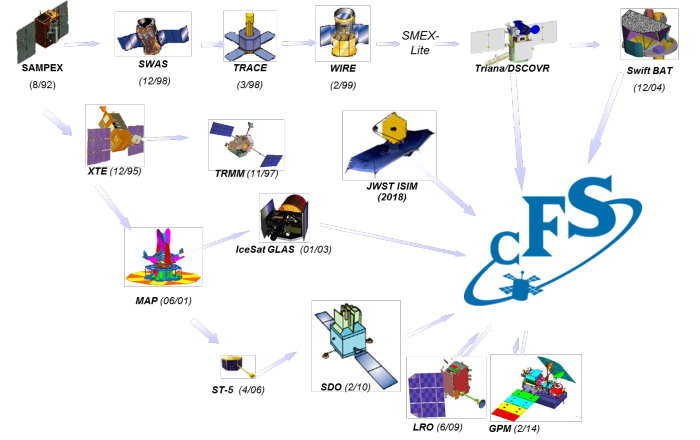
It is built around NASA’s core Flight System (cFS), the same architectural foundation used in real missions.

Network Discovery

OSK does not simulate concepts — it runs real structured flight software.

It doesn’t teach you about satellites. It places you inside their software architecture.

3. The Real Problem OSK Solves

Most people misunderstand OSK’s value. It’s not just about “running satellite code.”

OSK solves three problems that are otherwise almost impossible for beginners.

OSK Enables:

  1. Access: Open-source flight software you can modify freely
  2. Visibility: Debug, trace commands, inspect telemetry
  3. Safety: Break systems without destroying real missions

On real satellites, you cannot attach a debugger. In OSK, you can.

4. What Real Flight Software Looks Like

Satellite flight software is structured, not monolithic.

At the center is the core Flight Executive (cFE), which handles scheduling and coordination.

On top of that are applications (apps), each responsible for specific tasks.

Network Discovery

Apps communicate over a software bus using structured messages.

From a security perspective, controlling that message bus can influence system behavior.

5. How OSK Mirrors Real Satellites

OSK follows the same architecture used in real missions.

It includes a cFS-based core, multiple flight style applications, and a full command-and-telemetry pipeline.

When you send a command, it is parsed, routed, validated, and executed just like in actual missions.

This is real software architecture not simplified demo logic.

6. Why OSK Is Powerful for Security Learning

OSK does not focus on security by default — and that’s important.

Many real satellites prioritize functionality first and assume trusted environments.

Common Observations:

  1. Over-privileged commands
  2. Weak input validation
  3. Trust assumptions in command paths

OSK shows how design assumptions become attack surfaces.

It teaches why satellites are hackable not just how.

7. What OSK Does Not Do

OSK does not automatically make systems secure.

It does not protect you from attacks.

It does not magically teach hacking.

It is a learning environment.

If you assume something is secure just because it’s based on NASA software, you’ve already failed at security thinking. Security is designed intentionally. It’s never inherited automatically.

Where This Leaves Us

At this point, you should have a solid mental model of what satellite flight software actually looks like in practice, what OpenSatKit represents beyond just “another simulator,” and why it’s the right environment to start learning how real spacecraft are built, operated, and eventually tested from a security perspective.

So far, everything has been software-only and conceptual.

That changes next when this moves from simulations to real hardware. And that’s where things start getting interesting.

Interested in Satellite Software & Security Research?

Contact Amynasec for advanced satellite security assessments and research collaboration.

GET IN TOUCH